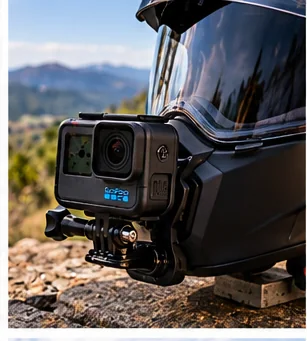
Products and configurations to compare
GoPro HERO13 Black
Current body supports removable Enduro battery.
Best when: you want modern stabilization and accessory ecosystem
Watch for: high-resolution recording uses battery/storage quickly
Helmet chin mount
Keeps camera near rider eyeline.
Best when: you want centered POV
Watch for: fit is helmet-specific
Enduro battery + high-endurance microSD
Spare power and reliable media prevent missed footage.
Best when: you record multi-hour rides
Watch for: storage capacity and heat limits matter
Resolution is a storage decision
4K/5K recording generates large files; match settings to how you edit.
Wind noise dominates built-in microphones
Helmet position and external audio options matter more than mic marketing.
Battery swaps should happen off-bike
Do not turn roadside battery changes into a traffic hazard.
Use horizon leveling carefully
Aggressive stabilization can crop the frame.
Archive important ride footage quickly
Action-camera cards are not long-term storage.
Helmet cameras add weight and aerodynamic load
A modern action camera is light in the hand but noticeable when mounted far from the helmet's centerline. Chin mounts usually feel more balanced than high top mounts and produce a natural riding perspective. Side mounts create more asymmetrical drag. Any mount should avoid compromising the shell, visor mechanism, vents or emergency-release features.
Use adhesive or manufacturer-supported mounts rather than drilling a certified helmet shell. A tether can prevent losing an expensive camera, but route it so it cannot snag controls, the motorcycle or roadside objects.
Battery and storage matter more than headline resolution
Long rides consume batteries and memory cards quickly. 4K or higher settings create large files and heat. For commuting or evidence-style recording, long runtime, loop workflow and easy charging can be more valuable than maximum cinematic resolution.
Before checkout
- Accessory is explicitly compatible with the exact helmet model
- Nothing compromises shell, EPS, retention strap or emergency-release hardware
- Visor or Pinlock part number matches the exact shield
- Speaker/mic placement creates no pressure points
- Camera mount does not block vents or visor travel
- Tint remains legal and usable for expected light conditions
- Cleaning product is safe for visor coatings and shell material
- Storage allows helmet to dry before sealing it in a bag
- Replacement pads/liners are OEM or verified compatible
- Accessory improves a repeated riding problem rather than adding clutter
The accessory must not weaken the helmet
A motorcycle helmet is protective equipment first. Every speaker, mount, adhesive, camera, replacement pad and visor should work around the certified structure rather than forcing the structure to adapt to the accessory. Avoid drilling the shell, cutting EPS, blocking emergency tabs or routing hard objects where they can create pressure points against the head.
Compatibility names can also be misleading. “58 mm” style near-standards from other industries do not really exist here: visor geometry, cheek-pad snaps, speaker pockets and shell generations are usually model-specific. Exact part number beats visual similarity.
First-ride test
Test new helmet gear on a short familiar ride. Confirm the visor seals and locks, speakers do not press the ears, the communicator can be operated without looking down, the camera creates no distracting drag, and earplugs remain comfortable after thirty minutes. Stop and fix pressure or visibility issues rather than assuming you will “get used to it.”
After the ride, inspect mounts and cables, dry anything damp, and check that nothing shifted inside the liner. Good helmet accessories should become almost invisible once the ride starts.
Frequently asked questions
How heavy is HERO13 Black?
GoPro's current comparison lists about 159 g with battery/mount.
How many batteries for a day ride?
It depends on settings and recording style; one spare is a sensible minimum.
Can I charge while riding?
Only with a safe setup that does not compromise weather sealing or cable routing.
What card should I use?
Use a capacity/speed class GoPro currently recommends.
Current product/source checks
Affiliate disclosure: MotorcycleHelmets.co may earn from qualifying purchases through Amazon Associates and eBay Partner Network at no extra cost to you. Amazon links use scouttheory-20; eBay links use campaign 5339137014.