Products and configurations to compare
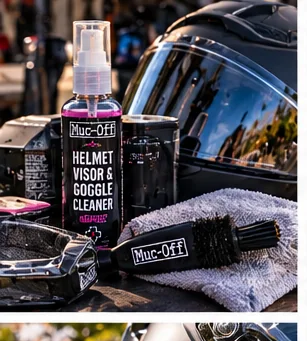
Helmet visor cleaner + microfiber kit
Use clean dedicated cloths.
Best when: bugs and fingerprints are routine
Watch for: verify compatibility with anti-fog/photochromic coatings
Soft detailing brush set
Useful dry tool.
Best when: dust/insects collect in vents
Watch for: stiff bristles can scratch finishes
Helmet liner wash / mild detergent
Clean padding without saturating EPS unnecessarily.
Best when: removable pads smell or hold sweat
Watch for: follow helmet maker washing method
Soften bugs before wiping
Wet residue lifts more safely than dry scraping.
Use separate cloths
Grease from the shell should not go onto the visor.
Remove liners only as designed
Do not pull glued EPS or emergency systems.
Clean vents gently
Compressed air can drive debris deeper or damage small parts if used aggressively.
Dry completely before reassembly
Trapped moisture creates odor and mildew.
Helmet care is about materials, not just cleanliness
Helmet shells, visor coatings, EPS liners, comfort padding and adhesives respond differently to chemicals. Use cleaners approved for helmet/visor materials and avoid aggressive solvents, gasoline, brake cleaner or household glass products with harsh additives unless the manufacturer explicitly allows them. Wash removable comfort liners according to the helmet manual and let them dry completely before reinstalling.
Visors scratch easily because dust acts like abrasive grit. Rinse or soften bug residue before wiping, use a clean microfiber cloth and avoid dry-scrubbing a dusty shield. Anti-fog inserts need even gentler handling because their inner surfaces can be soft and moisture-absorbing.
Drying should be gentle
A low-temperature boot/helmet dryer or room-temperature airflow can accelerate drying after rain. Avoid blasting the helmet with a space heater or hair dryer that could overheat adhesives, foam or plastics. The goal is airflow, not cooking the liner.
Before checkout
- Accessory is explicitly compatible with the exact helmet model
- Nothing compromises shell, EPS, retention strap or emergency-release hardware
- Visor or Pinlock part number matches the exact shield
- Speaker/mic placement creates no pressure points
- Camera mount does not block vents or visor travel
- Tint remains legal and usable for expected light conditions
- Cleaning product is safe for visor coatings and shell material
- Storage allows helmet to dry before sealing it in a bag
- Replacement pads/liners are OEM or verified compatible
- Accessory improves a repeated riding problem rather than adding clutter
The accessory must not weaken the helmet
A motorcycle helmet is protective equipment first. Every speaker, mount, adhesive, camera, replacement pad and visor should work around the certified structure rather than forcing the structure to adapt to the accessory. Avoid drilling the shell, cutting EPS, blocking emergency tabs or routing hard objects where they can create pressure points against the head.
Compatibility names can also be misleading. “58 mm” style near-standards from other industries do not really exist here: visor geometry, cheek-pad snaps, speaker pockets and shell generations are usually model-specific. Exact part number beats visual similarity.
First-ride test
Test new helmet gear on a short familiar ride. Confirm the visor seals and locks, speakers do not press the ears, the communicator can be operated without looking down, the camera creates no distracting drag, and earplugs remain comfortable after thirty minutes. Stop and fix pressure or visibility issues rather than assuming you will “get used to it.”
After the ride, inspect mounts and cables, dry anything damp, and check that nothing shifted inside the liner. Good helmet accessories should become almost invisible once the ride starts.
Frequently asked questions
Can I use glass cleaner?
Only if the helmet/visor maker says the ingredients are safe.
Can I wash cheek pads?
Usually when removable and the manual allows it.
Can I use paper towels on visor?
Microfiber is generally safer against scratching.
How often clean?
As needed; interior frequency depends on sweat and riding conditions.
Affiliate disclosure: MotorcycleHelmets.co may earn from qualifying purchases through Amazon Associates and eBay Partner Network at no extra cost to you. Amazon links use scouttheory-20; eBay links use campaign 5339137014.