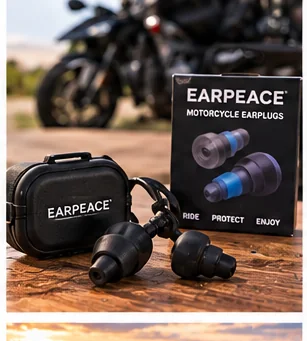
Products and configurations to compare
EarPeace Moto PRO
Current PRO filters are offered in 20 or 24 dB SNR.
Best when: you use helmet comms and ride long distances
Watch for: fit/seal matters more than the advertised filter number
EarPeace Moto
Includes 17, 20 and 26 dB SNR filter sets.
Best when: you want several attenuation choices
Watch for: universal shape may fit differently than PRO
Foam motorcycle earplugs
Excellent value when properly fitted.
Best when: you want inexpensive disposable protection
Watch for: correct insertion is essential and comms may sound more muted
Wind noise can be fatiguing even in premium helmets
Aerodynamics reduce noise but do not eliminate it.
Fit beats filter spec
A leaking reusable plug can underperform a properly inserted foam plug.
Comms often sound clearer with plugs
Wind noise falls first, allowing lower speaker volume.
Carry spares
Reusable plugs are easy to drop at gas stops.
Keep them clean
Wash reusable plugs per maker instructions and replace worn material.
Wind noise is the main hearing problem
A quiet helmet helps, but highway airflow can still be loud enough to cause fatigue and hearing risk over time. Filtered motorcycle earplugs reduce wind noise while preserving more speech, intercom and traffic awareness than simple solid plugs. Fit matters more than brand: a partially sealed earplug can provide far less attenuation than the rating suggests.
EarPeace's current Moto line uses interchangeable 17, 20 and 26 dB SNR filters, while Moto PRO offers 20 or 24 dB SNR versions. Those are useful current examples of choosing attenuation around ride length and communication needs rather than simply buying the highest number.
Intercom volume is not hearing protection
Turning speakers louder to overpower wind can increase listening fatigue. Properly fitted earplugs often make intercom audio clearer because they reduce broadband wind noise first. Set communication volume only high enough to remain intelligible.
Before checkout
- Accessory is explicitly compatible with the exact helmet model
- Nothing compromises shell, EPS, retention strap or emergency-release hardware
- Visor or Pinlock part number matches the exact shield
- Speaker/mic placement creates no pressure points
- Camera mount does not block vents or visor travel
- Tint remains legal and usable for expected light conditions
- Cleaning product is safe for visor coatings and shell material
- Storage allows helmet to dry before sealing it in a bag
- Replacement pads/liners are OEM or verified compatible
- Accessory improves a repeated riding problem rather than adding clutter
The accessory must not weaken the helmet
A motorcycle helmet is protective equipment first. Every speaker, mount, adhesive, camera, replacement pad and visor should work around the certified structure rather than forcing the structure to adapt to the accessory. Avoid drilling the shell, cutting EPS, blocking emergency tabs or routing hard objects where they can create pressure points against the head.
Compatibility names can also be misleading. “58 mm” style near-standards from other industries do not really exist here: visor geometry, cheek-pad snaps, speaker pockets and shell generations are usually model-specific. Exact part number beats visual similarity.
First-ride test
Test new helmet gear on a short familiar ride. Confirm the visor seals and locks, speakers do not press the ears, the communicator can be operated without looking down, the camera creates no distracting drag, and earplugs remain comfortable after thirty minutes. Stop and fix pressure or visibility issues rather than assuming you will “get used to it.”
After the ride, inspect mounts and cables, dry anything damp, and check that nothing shifted inside the liner. Good helmet accessories should become almost invisible once the ride starts.
Frequently asked questions
Will earplugs block traffic sounds?
Filtered motorcycle plugs aim to reduce harmful wind noise while preserving awareness, but attenuation always changes sound level.
Can I hear Cardo/Sena with earplugs?
Often yes, especially with correct speaker placement.
Foam or filtered?
Foam for cheap strong attenuation; filtered for reusable comfort/comms.
Are earplugs legal?
Rules vary by jurisdiction; check local law.
Current product/source checks
Affiliate disclosure: MotorcycleHelmets.co may earn from qualifying purchases through Amazon Associates and eBay Partner Network at no extra cost to you. Amazon links use scouttheory-20; eBay links use campaign 5339137014.