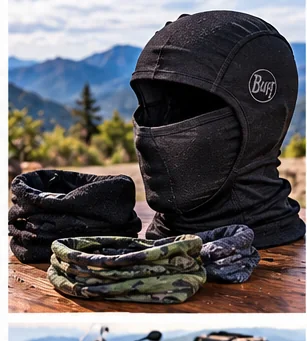
Products and configurations to compare
Thin moisture-wicking balaclava
Minimal bulk.
Best when: sweat and liner cleanliness are the main goals
Watch for: cheap seams can create forehead pressure
Windproof winter balaclava
Focus insulation below helmet edge.
Best when: neck/chin wind is a major problem
Watch for: bulk may alter snug fit
Skull cap / helmet liner cap
Easy to wash and carry.
Best when: you only need crown sweat control
Watch for: less neck/face coverage
Flat seams are worth paying for
A thick seam becomes painful under helmet pressure.
Do a fit check after adding layers
Helmet should remain stable and straps should sit normally.
Wash base layers more often than the helmet liner
That is one of their biggest benefits.
Winter insulation belongs mostly below the shell
A neck gaiter can add warmth without crowding the helmet interior.
Keep vision clear
No fabric should obstruct peripheral view or bunch near the eyes.
Accessories cannot repair poor helmet fit
A balaclava, skull cap, replacement cheek pad or speaker spacer can fine-tune comfort, but none should be used to make an obviously wrong shell size acceptable. A properly fitted new helmet is snug throughout without sharp pressure points, excessive rotation or forehead pain. Comfort padding breaks in; impact liner does not meaningfully reshape to fix major sizing errors.
Replacement cheek pads can be useful when the manufacturer offers different thicknesses for the same shell/liner architecture. Use exact OEM-compatible parts and preserve emergency-release systems where fitted.
Thin base layers work best
Bulky seams and thick winter masks can create pressure spots or reduce helmet stability. Choose flat-seam, moisture-wicking layers made specifically for under-helmet use when possible.
Before checkout
- Accessory is explicitly compatible with the exact helmet model
- Nothing compromises shell, EPS, retention strap or emergency-release hardware
- Visor or Pinlock part number matches the exact shield
- Speaker/mic placement creates no pressure points
- Camera mount does not block vents or visor travel
- Tint remains legal and usable for expected light conditions
- Cleaning product is safe for visor coatings and shell material
- Storage allows helmet to dry before sealing it in a bag
- Replacement pads/liners are OEM or verified compatible
- Accessory improves a repeated riding problem rather than adding clutter
The accessory must not weaken the helmet
A motorcycle helmet is protective equipment first. Every speaker, mount, adhesive, camera, replacement pad and visor should work around the certified structure rather than forcing the structure to adapt to the accessory. Avoid drilling the shell, cutting EPS, blocking emergency tabs or routing hard objects where they can create pressure points against the head.
Compatibility names can also be misleading. “58 mm” style near-standards from other industries do not really exist here: visor geometry, cheek-pad snaps, speaker pockets and shell generations are usually model-specific. Exact part number beats visual similarity.
First-ride test
Test new helmet gear on a short familiar ride. Confirm the visor seals and locks, speakers do not press the ears, the communicator can be operated without looking down, the camera creates no distracting drag, and earplugs remain comfortable after thirty minutes. Stop and fix pressure or visibility issues rather than assuming you will “get used to it.”
After the ride, inspect mounts and cables, dry anything damp, and check that nothing shifted inside the liner. Good helmet accessories should become almost invisible once the ride starts.
Frequently asked questions
Can a balaclava make a helmet too tight?
Yes, especially thick winter fabrics.
Does it keep the helmet cleaner?
It can absorb sweat and oils before they reach the liner.
Balaclava or skull cap?
Balaclava for face/neck coverage; skull cap for minimal crown protection.
Can I wear fleece under a helmet?
Only if it does not compromise fit or comfort; thin purpose-made layers are preferable.
Affiliate disclosure: MotorcycleHelmets.co may earn from qualifying purchases through Amazon Associates and eBay Partner Network at no extra cost to you. Amazon links use scouttheory-20; eBay links use campaign 5339137014.